Literacy Comic Reflection
After reading several comics in class and interpreting these pieces of works in a brand new perspective, it was refreshing and interesting to create my own comic.
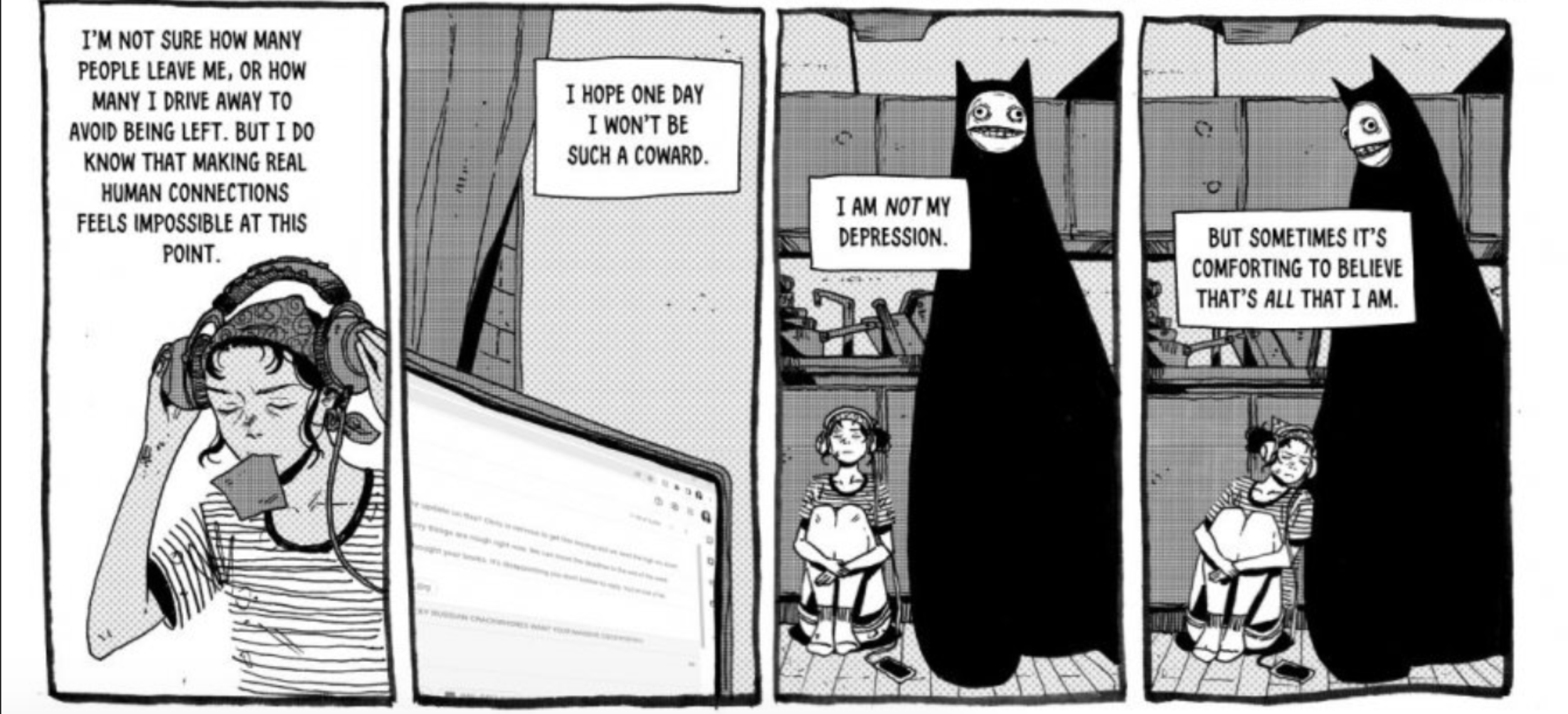
When I was planning my own comic, I wanted to try out different types of panels just like Stitches and Spinning did, so my readers would comprehend rather than simply read. Though in the end, I did not try out as many as I anticipated, I do think the change in style of panels gave the comic a different rhythm that helped the reading process. Another aspect I tried to include was the “choice of moment.” Since there were barely any actions or actual events that required me to use several panels to explain, I used “moment to moment” for most of my panels. In my opinion, these intentional choices has helped my ability in writing through revisions and editing. The more revisions and edits I made to my comic, the more details I was able to add to the final product. I no longer only cared about the words; I paid more attention to the drawings themselves, adding more information that words could not describe.
After finishing the comic, I realized that the process was distinct from writing my literacy narrative. First, the focus and details emphasized on each were not the same. The literacy narrative required me to include details with words. I only had one way to express my ideas, which was to describe with vocabulary. However, with the comic, except for words, I could include drawings. Instead of trying my best to narrate a situation, I simply drew the situation. With this change, I even saw my own story with a different perspective. I was able to identify the key moments in my life that influenced my writing. I composed some of the events in the essay to a few panels in the comic. Every time my writing style changed, it was under the influence of a teacher: my third-grade English teacher, 10th grade chemistry teacher, and my senior year English teacher.
The one thing I wanted to do in my comic was expressions, however, due to my lack of drawing skills, I was unable to translate the pictures in my mind to my comic. The first thing I would ask an illustrator to do is to draw out the expressions on my characters. I did not include expressions because I thought the original drawings I had were too misleading and did not match with my purpose. Thus, the characters did not have expressions. Also, I would want the illustrator to make my drawings easier to understand. For example, on the last page, there was one panel that I intended to draw a shadow of myself. However, I do not think it is easy for the readers to interpret this panel because of the drawing. With these changes, I believe it would make my comic more complete.


