The Secret Language of Comics

Week Ahead: 5

9/24 Sketch 5: Triptych
5 9/25 Spinning– Prologue and chapters 1-3 (1-114)
9/27 Spinning — chapters 4-5 (115-82)

Note that I made a couple changes to the schedule — I bumped back the due date for the literacy narrative comic until 10/4. Before that class on Wednesday 10/4, please publish to your site images of your storyboard. They can be photographs of drawings if your work is analog. Just make sure they are legible. If you have a hardcopy of your work, bring that in with you to class too. We’ll spend a chunk of class in small groups sharing your storyboards and giving each other feedback.

Tomorrow, we’ll focus on the beginning of Spinning, starting off that discussion by comparing Walden’s graphic narrative to David Small and to Allie Brosh. Tillie Walden won the very prestigious Eisner Award for Spinning when it was published in 2018, when she was 22 years old. Spinning, which again was published when she was 22 years old, was Walden’s fourth graphic narrative book. In the five years since Spinning was published she has published eight more books (to be totally fair, two of those are forthcoming later this year). You can read all of her fifth book, On a Sunbeam online here — it’s worth at least glancing through some of those pages to get a sense of where her style has gone since Spinning.

We’ll start with how Walden establishes character and setting compared to Small and how her tone/visual style is similar and different to Small’s. How does Walden use the page, panels, and gutters in comparison to Small? Note that there is one small moment in Spinning where Walden shows herself holding a copy of Stitches, so she has signaled for us that Small’s text is an influence for her — how has it influenced her as a writer?

Week Ahead: 4

9/17 Sketch 4: Combophoto
4 9/18
  • Stitches — “I was fourteen” (157-242)
  • Hillary Chute, “Comics for Grown-Ups” from Why Comics?: From Underground to Everywhere
9/20

We’ll focus class discussion on Monday on the last ten pages of Chute’s essay (the subsection entitled “Reading Comics”) in order to develop a critical vocabulary of terms that we can use to understand what is happening as we read the comics for the class. And then we’ll apply those terms to the section of Stitches covering David’s fourteenth year.

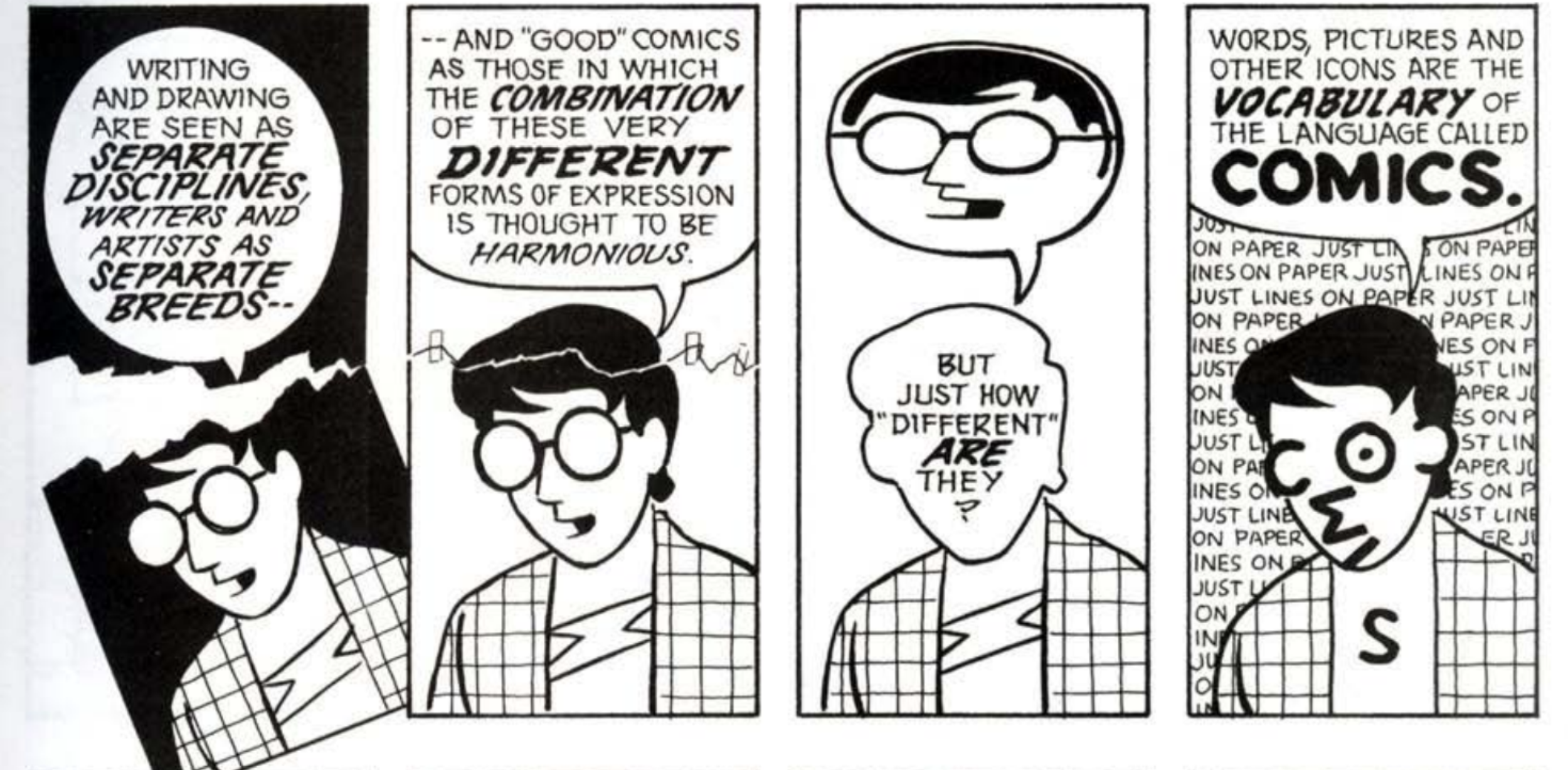
We’ll start class on Wednesday looking at the combophotos you made over the weekend and then focus discussion on the ending of Stitches. We will look very briefly at the McCloud chapter, but mostly I think that’s a text to help you think about how you will create your own comics in a few weeks. If you find terms in that chapter that help you to read critically, that’s fantastic and feel free to bring them up for discussion in class, but we probably won’t analyze the McCloud reading a whole lot together. The Sacco reading is not required at all, but it’s a really interesting current text that is a different approach to organizing a comics narrative. I wanted to assign it but couldn’t quite fit it into the schedule, so it’s here if you have time and want to read another example.

I’ll post a sign up sheet for feedback on the literacy narratives soon.

Week Ahead: 2

2 8/28
  • Read the syllabus and leave a comment on this post
  • Create WordPress site
  • Join the Slack workspace
8/30
9/3

We spent class today applying the rhetorical situation key terms to Allie Brosh’s “Adventures in Depression.” On Thursday we’ll spend a little time thinking about how the second part shifts our understanding.

We’ll also spend a chunk of class thinking about Randy Olson’s ABT thesis template and look at an example of a deductive essay that we can transform into an inductive one by rearranging the structure.

Your second sketch assignment is due on Sunday 9/3 — for this one you’ll need to use analog tools to draw your sketch because you’ll be incorporating a physical object into the sketch. It’s an exercise in simple visual storytelling and lateral thinking, so have some fun with it. Please make sure to give your sketch a funny and/or clever title.

Also, you should be working on the pre-writing exercise for your literacy narrative, which will be due in week 3. You do not need to publish the pre-writing work but I’d recommend you try to get through that exercise before class on Wednesday so that you leave yourself time to work through the essay itself by next week.

Feature Image credit: “second class” by Flickr user Georg for the One Digit group

css.php