The Secret Language of Comics

Literacy Narrative Part 3 Reflection

This literacy narrative project has been different from any other writing assignment I have had in english classes, due to the fact that I have never had to write a comic before. Writing alphabetically and in comic form with the same storyline proved to be challenging but fun. Having the ability to see other students’ work was also extremely helpful for my learning in the writing process. I liked how we started off writing alphabetically because that was what I was most familiar with. Turning the alphabetic style into a comic was the most difficult part for me because I struggled to fit the entirety of my alphabetic narrative into the comic effectively. When I transformed the alphabetic narrative into a comic, I realized how choppy my narrative was. Seeing the narrative in visual form allowed me to realize and acknowledge what changes I needed to make to my narrative to make it more cohesive. My comic was more like a photo collage than a comic, so I made an active effort to make my alphabetic version more story-like. I was glad that the third part of the process was to go back to the alphabetic and make revisions. Critiquing each other’s storyboard was an interactive way to learn throughout the process, as well as having access to everyone’s website and being able to see each other’s work. Along with never creating a comic before this class, I had never made my own website before. This class and this project has helped me learn how to create and utilize my own website, which will most definitely be extremely helpful in the future. After going through all three stages of the process, I see my narrative differently than I did before. Originally I was attempting to tell the story from the beginning of my life up to this current point in time. After going back, however, I connected the end of my narrative to the beginning in order to have more synthesis and conclusion.

Literacy Narrative Part 3

If you flip through my elementary school yearbook, there is a series of pages with photos of each fifth grade graduate lined up in neat boxes. Under the photos, there are a few fun facts about each student; one being what they want to be when they grow up. While most of my peers aspired to be an astronaut or a lawyer, I had a different passion that I pursued throughout elementary school. When you land on my box, you will find an eleven year old girl in a bright purple sweater with the caption: “I want to be an author when I grow up”. 

On one of the first Christmases I can remember, I recall tearing open a gift from Santa to find a “make your own book” kit. Little did I know that this very kit would be the catalyst for my aspirations to be an author. The kit contained sheets of paper and markers to write and illustrate a story. That very day, I wrote and illustrated my first book: “Family Trip to the Zoo”. The story describes a family of four taking a trip to the zoo, the main character being my aunt Keara. I submitted the writing and illustrations, and in a few short weeks I received a hardcover version of my story. Over the course of my elementary school years, I wrote and illustrated a total of five books; which you can still find tucked in my bookshelf at home. My aunt holds the title of favorite relative, and I devoted four out of five of my stories to her – one being more centrally focused on her daughter. Aunt Keara has her own copies of each book, and would encourage me to write a sequel after receiving each new story.

As the years passed through middle school and into high school, my books collected dust on my shelf. My passion for reading and writing slowly faded into the background, as school and basketball took hold of my focus. It wasn’t until my first heartbreak that sparked up my passion for writing once again. My first break-up occurring in my junior year of high school snuck up behind me and knocked me out. In the midst of the messy ending, I sobbed for weeks on end; physically unable to eat, sleep, or function. I desperately needed closure, which he was unwilling to provide. I sent him paragraph after paragraph, with no response in return. I realized my desperation was only pushing him further away, and that I needed to find closure on my own. In a moment of hopelessness, I resorted to journaling. Every time I wanted to text, call, or reach out, I would write everything I wanted to say to him in my journal. Flipping through my journal entries is the epitome of an emotional rollercoaster. One entry will be beautifully written, reminiscing on how “perfect” our relationship was and how I would do just about anything to get him back, while the next entry would be written in all capital letters about how horrible he treated me and made me feel. No matter how tempted I was to send him these entries, I held my ground and kept them to myself. The more I wrote, the better I felt. Eventually, I no longer depended on my journal or felt suffocated by the urge to reach out. We broke up at the beginning of May of my junior year, and my last entry was July 21st. The irony of it all is that a few months later, he reached out to me begging for me back and apologizing for everything he put me through. Unfortunately for him, by then I had moved on and soon after met someone new. Healing is a process, and without utilizing writing as an outlet, I am unsure as to whether or not I would have made it through.

Starting that very summer (the summer of my breakup), my mom hired me to tutor my younger brothers in English. She paid me twenty dollars an hour and posed the tutoring sessions as distractions from my emotional distress. While I grew up with a natural passion for reading and writing, my brothers struggled with finding the same motivation. I created lesson plans consisting of basic reading comprehension, grammar, and writing. Conducting these lessons contorted my vision as a writer, due to the fact that I had the lens of an instructor rather than a student. Creating the lesson plans and teaching my brothers led me to plunge further into the details of the language, and fine tune my own writing in the process. I used samples from my own writing in the lessons, which proved to be beneficial for both my brothers and me. The process gave me awareness of the hidden errors in my writing: teaching grammar resulted in a closer analysis of my own. While my tutoring days are over, I learned a lot from taking the role of teacher and improved my writing as a result. 

If someone were to now ask me “what do you want to be when you grow up?”, I would most definitely have a different answer than my fifth grade self. My answer today would probably be a PA (physician’s assistant), but who knows what the answer will be a year from now. Regardless of what my final decision will be, I am almost certain that writing will be a key aspect of any job I wish to pursue. The ability to communicate, whether it is through writing, speaking, or through visuals, is a universal necessity. My growth in writing throughout adolescence, while it may appear to be insignificant, will prove to be important in the grand scheme of life. 
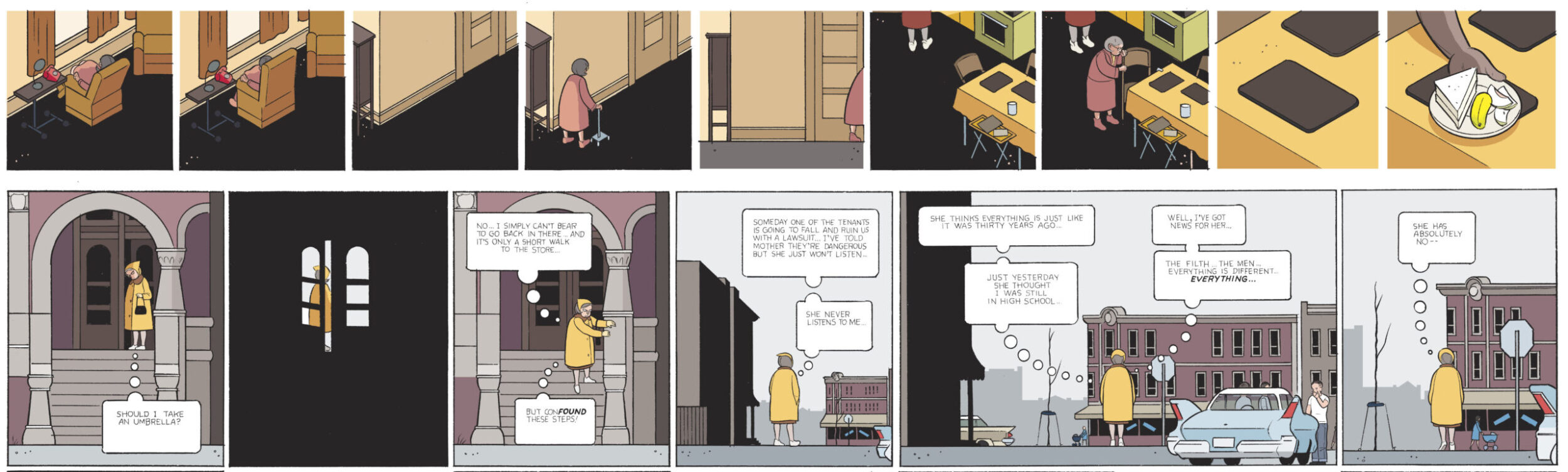
Literacy Narrative Part 3 Reflection

The entire literacy narrative project has allowed me to meet the course Learning Outcomes through employing the use of technology to make a comic and then using that comic to revise the writing that I had done previously to make said graphic novel. This has allowed me to approach writing as a process that had phases with each phase offering new perspective on another, resulting in a more polished final product. It was very eye-opening to return to the literacy narrative after creating my comic. This allowed me to see how much I could revise my essay and keep a consistent message across both mediums of expression. It also helped me to realize how much I had grown as a writer in this class by allowing me to see how I used to write and rewriting the narrative based on what I had learned through the Learning Outcomes. After having worked in the visual medium, my revisions looked more like adding details that would allow a better picture to be drawn from what I had written. I feel that this would allow for a more cohesive and interesting argument to be made. This revision also involved a lot of omission which was the result of me telling the story through different means. All in all, I am glad that I got to do this multi-step assignment as it has made me more mature as a writer and taught me a lot about expression as a process along the way. 

Literacy Narrative Part 3

I’m reminded of being assigned To Kill a Mockingbird in my 8th grade English course when I think of being trapped into reading. This book, possibly contrary to the popular opinion of avid readers and those who are deeply invested in literature, bored me to an unparalleled extent. I remember struggling to keep my eyes glued to the seemingly never-ending sequence of words on a page. That’s what reading felt like to me, an infinite loop of ink I had to make sense of because my teacher said so. I found it hard to believe that people could enjoy this as a hobby or anything really. One class, I had made the mistake of letting the staleness of reading get to me. Words began to blur and mesh on the page until my eyelids grew too heavy and I fell asleep. I remember being abruptly taken up from my Harper Lee-induced sleep and was embarrassed to find that I was the only student left in the classroom. I was alone in a dark room, my only company being the singular light bulb left on when everyone else left out. This meant that it had become obvious that To Kill a Mockingbird had won the tug of war between itself and me staying awake. I will never forget the consequence that I faced as a result of my disinterest in this book. I spent a while writing that letter apologizing to my English teacher, Ms. KJ, promising change and stating how I would stay awake in future classes. This consequence is what shifted my approach to reading in class as I made a greater effort in reading and participating in class discussions. The unforeseen product of this new approach was the book growing ever more interesting. I had started to give the book a real chance. I began indulging in literature on a level beyond my previous superficial understanding of reading. The more I read, the more reading graduated from being just ink occupying space on a blank canvas. It became a truly captivating story that employed the use of my imagination to place myself in the world created. This new understanding allowed for my next impactful encounter with reading.

I sit in the cool kitchen area and am greeted by the warm rays of the sun as they beam through the kitchen window and kiss my skin. I’m deeply invested in The Family Across the Street by Nicole Trope, almost as invested as my brother is to my left, in his phone. He tries to get my attention but fails against Nicole Trope. I’m fully inside the text. My brother hadn’t removed the veil and uncovered the true beauty in reading, the bona fide light of being able to imagine the story and see the action that is unfolding as I flip from page to page. I’ve never been so invested in a book before. I’ve never been drawn into a book and felt as if I wasn’t just reading anymore. I was fully experiencing it instead. This wasn’t like when I first started reading To Kill a Mockingbird. I began to question my definition of reading. Was this what reading truly was? Is it what it felt like when I was indulging in this book? Is it more than just its definition? After reading the summer reading assignment that I chose, it was confirmed that reading was so much more than just reading. When you read you are drawn into the story and can see, hear, smell, and overall experience the world that the book has created. It’s inviting to imagine yourself through the eyes of the narrator as you watch the plot unfold. Wondering, seeking what’s next as your scramble from page to page. I’m briefly removed from the book as I hear my brother chuckling next to me. I look over to see what he’s watching, only to realize that it’s not as exciting as my book. So I return to the story, told through the, previously, never-ending black ink in front of me that I wished could exceed the bounds of the back cover when I finished reading it. 

You develop a heightened level of appreciation for something you hate, then learn to love. Coming out on the other end of the tunnel, redefining what reading means to me, has allowed me to find joy in it. I recognized the magnitude of difference between my past and current opinions surrounding reading and reflecting on how my ideals changed. I found that I gave myself a chance to experience literacy in a different light, granting me a newfound enjoyment of reading and recognition in its true power and significance in my life. 

Literacy Narrative Part 3 Reflection

All of the literacy narratives have helped me develop my writing as a process and think critically as I jot down my ideas for my essay and comic. The first version of my literacy narrative challenged my skills in drafting and editing. I had to plan out what I wanted to include in my narrative and turn my ideas into words. For the comic, it required my ability to translate my ideas using another form of presentation. Lastly, this literacy narrative practiced my ability to revise and reflect on my past work.
After creating my comic, I was able to identify the most crucial parts of my story that shaped my writing. Since the comic is much shorter and has more restrictions compared to essays, I left out parts of the first narrative in the comic. This allowed me to check whether these parts of my essay were expressed clearly or if enough detail was included. For example, I focused all of my revisions on the conclusion of my original narrative. I realized that I left out a lot of reasoning and insight at the end of my narrative, and the comic was what helped me to identify this gap.
Now, I see my story emphasizing the most on my academic experience. My writing has changed because of the needs in different classes; it has never been because of myself. This has led me to realize that I should try to write with my own style without the restriction of others. In terms of the narrative, I tried to develop more on the most important part of the story—how both informal and formal writing shaped my writing now.

Literacy Narrative Part 3 Reflection

Oftentimes when I write I feel that their is a disconnect between the words I write and my subconscious thoughts. However, the literacy narrative process- writing the first draft, translating it into a comic, and then translating the comic back into an essay format- allowed me to better understand my subconscious thoughts to ensure that the final essay conveyed the narrative I intended. Additionally, I learned new strategies that I would use in writing future essays like creating a small visual to better outline what I want to cover within my essay. 

The narrative process included many setbacks. One was finding the medium that I was going to visualize the comic with. After multiple attempts of trying to draw the comic and failing, I decided that I had to take a leap of faith and trust my creativity in a new medium. I did this by using Canva images as the main medium for my graphic novels completed by hand-drawn images to further the rhetorical strategies I wanted to implement. After creating the comic, the writing process was a lot smoother than I expected. I felt that the visual medium forced me to focus on the main arguments I was trying to claim which in turn allowed for me to have a better structured essay with more relevant details to enhance the story. When looking at the difference between the first draft of the essay compared to the final copy, my final copy has a much clearer direction throughout the essay explaining the complicated relationship I had with the english language and how I finally found that natural interest in it that I always wanted.

Sketch 10: Mix Tape

https://music.apple.com/us/playlist/lost-dog/pl.u-AkAmvxyTle5e0XA

Since I was 11 I have been playing in concerts and music competitions. When I was in high school I was part of a vocal jazz group that won the largest High School Jazz festivals in the country for 9 straight years. Last summer I started playing, as a solo act, paid gigs for restaurants, private parties, and weddings, and got offered to play on a cruise line. While all of this may sound impressive I found that my love for music dwindled when the start of performing was mixed with the pressure to succeed and live up to either the money that was promised or the judges who would give review and criticize. This year I have been burnt out musically and am taking the semester off from voice lessons. With new-found time, I started my own band here at Emory. While we don’t have a name yet we have enjoyed practicing together and have some gigs in the pipeline for Spring 2024.

The reason the playlist is so long is because I took the time to put together a playlist that covers most of my musical tastes combined with songs that are feasible to perform in a live setting. I have already played live for money 75% of the songs on the mix tape and am working on the other 25%. I enjoyed making this playlist as it let me reflect on my time performing and reminded me why I love to play live. I remember each song I have played, so going through the mix tape filled me with nostalgia.

One music taste that was severely left off of the playlist and should be noted was Jazz. As I said earlier my background with Vocal Jazz as a genre is extensive and I even wrote a personal statement in High School about Titled “The Jazz Thinker,” a play on the “The Jazz Singer.”

This is my mix tape cover. It is a graphic I used for a live performance last year. The BayWalkers is the name of my family band. My older brother pictured above plays bass and my twin brother plays drums. We do not have a current guitar player but use a different one for different gigs.

Literacy Narrative, Part 3 Reflection

The entire creation of this narrative has allowed me to think more critically as I write from my own personal experiences, using and evaluating the writing we have read from comic memoirs like Stitches and Spinning. I was also able to practice writing as a process, continuing to edit my work even after the final comic was drawn. By doing so, I was able to approach my essay through another lens, which helped me to reconstruct my essay to highlight the main points that became visible during the visual aspect of the project.

Returning to my project after having created the comic made the message that I was trying to communicate a lot more visible, and I was able to easily pinpoint how I needed to better organize my essay for it to convey what was shown in the illustrations.

I see my narrative to be placing most emphasis on how my AP Lang teacher impacted my reading and writing experience most positively. So, I tried to refocus my essay in a way where it doesn’t make my elementary and middle school experiences too overpowering. I also tried to steer away from my writing to be so chronological, which is why I edited most of the paragraphs before I got into the quarantine/zoom class experience.

CHEFFIN’ IT UP

The rhetorical situation for my mix is “making pancakes in the Complex kitchen at 5 AM.” My roommate and I have done a lot in the kitchen of complex, from making quesadillas and pancakes to baking a whole birthday cake. I decided on a mood shift I wanted to create that follows how Carolina and my mornings go.

We usually chef it up in the morning, so I started with some light-hearted, cooking-inspired music (Le Festin from Ratatouille and Alan’s Psychedelic Breakfast by Pink Floyd), followed by some silly dancing music. There is an instrumental interlude (Everything Happens To Me – Live by Joe Pass) for enjoying our food, then some more thoughtful, introspective music for when we talk about our plans for the day or what our week has been like so far. My mix conveys the feelings/moods/behavior I go through while cooking at 5 AM–still half asleep, maybe a little out-of-it, but having fun.

Literacy Narrative Pt. 3 Reflection

The nature of this three part literacy narrative has presented a perfect opportunity for me to think introspectively throughout this semester. The topic of how my journey in reading has molded me growing up is something I have rarely thought about. I think this was reflected in the flaws of my first narrative because I focused way to much on now and not enough on how I got here. One of the biggest edits I made for my final narrative was to expound upon my transition from books to reality. I was inspired for years by the fictional characters in the literature I read growing up, but it took some special role models in the real world for my eyes to be opened to my true potential. In my final version, I made sure to emphasize that critical transition so that my childhood experiences with literature could be better understood as a cause for my development. My experience with trial and error in my writing this semester follows the learning outcome of writing being a process. The sketching of this narrative was also monumental in my understanding of that transition that I had from books to reality. The process of examining some of my classmates’ narratives allowed me to compare with stories with that of others. I was also able to take their advice and encouragment to improve my own narrative. For example, Tofi complimented my targeted capitalization of words of emphasis in my sketch, so I made sure to add even more of that to my final version. That process followed the learning outcomes involving being collaborative with my classmates and evaluating the ideas of others.

css.php